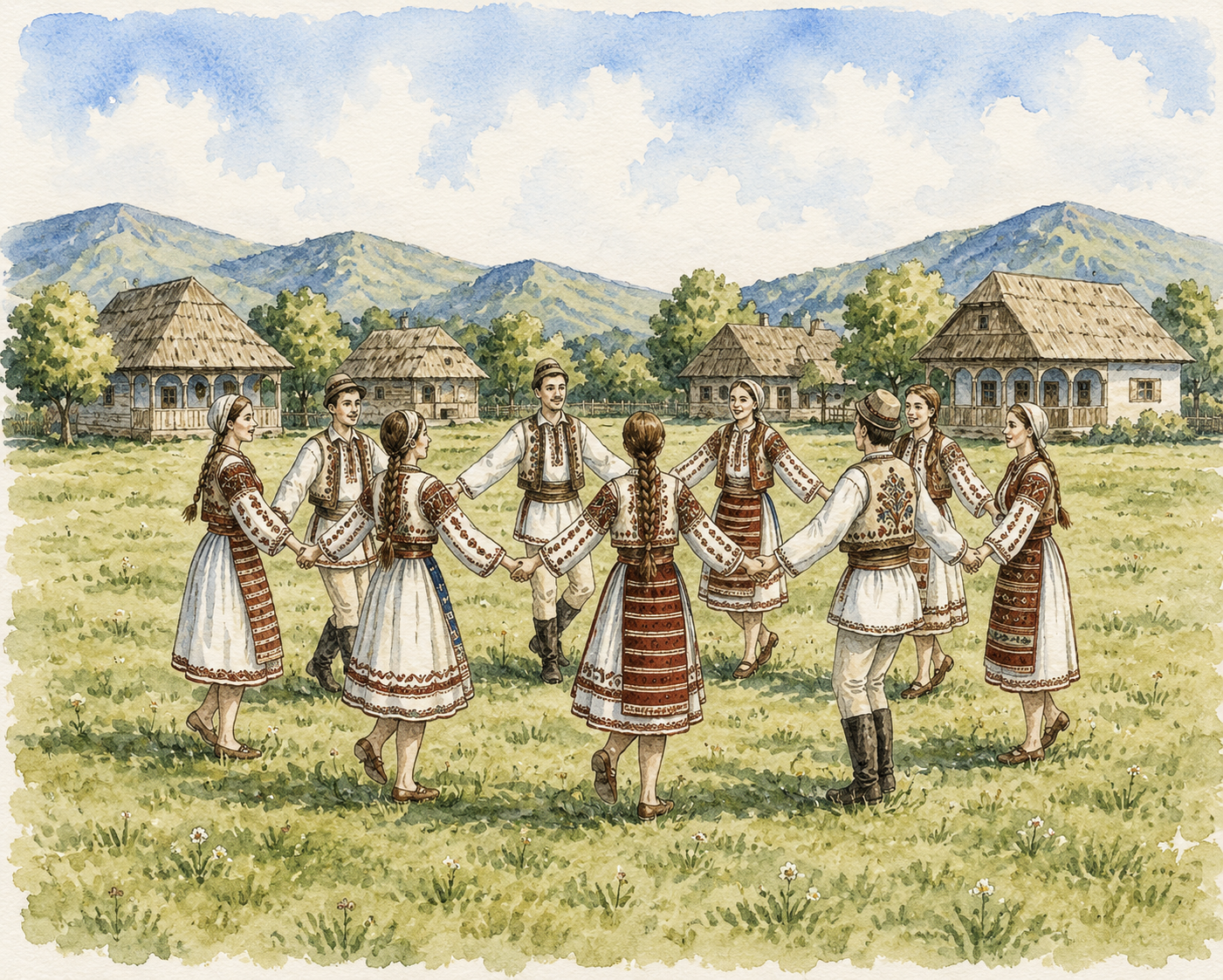
A tour through places where time seems to have stood still: old monasteries, museums, traditional villages, and cities that carry history in every corner.
Intro: Oltenia – where the past is alive
Oltenia has a unique way of keeping the past close. You feel it in the painted monasteries, in the old country houses, in the city squares where history is still discussed over coffee.
The cultural route we propose takes you through the most representative places of the region — a mix of spirituality, art, architecture, and local stories.
It's a journey for those who believe that a good vacation also means understanding why a place looks the way it does.
1. Cozia Monastery – the beginning of the story
Built in 1388 by Mircea cel Bătrân, Cozia Monastery is one of the oldest and most important churches in Romania. Its Byzantine architecture and remarkably preserved mural paintings offer a living lesson in history and religious art.
The place has a tranquility difficult to describe, and the view towards the Olt river perfectly complements the atmosphere.
To see: original interior paintings, Mircea cel Bătrân's tomb, the monastery museum
Ideal season: all year, but spring and autumn are the most photogenic periods
Local tip: visit early in the morning — it's quieter and the light is superb for photos
2. Călimănești – spa history and period architecture
Just a few kilometers from Cozia, Călimănești has a spa history dating back to the 19th century. Aristocrats and intellectuals came here for treatments, and the period hotels still retain the elegant atmosphere of those times.
Walking along the Olt river is a small lesson in interwar architecture, and the Church of Ostroveni adds a discreet touch of spirituality.
To see: Central Park, the old buildings on the main boulevard, the historic baths
Extra tip: some old hotels can be visited even if you are not staying there — ask at the reception
3. Govora Monastery – the tranquility beneath the forest
Govora Monastery is one of those places that seem intentionally hidden. Built in the 14th century and rebuilt several times, it was an important cultural center — one of the first Romanian language books, Pravila de la Govora (1640), was printed here.
The place is ideal for an hour's stop: fresh air, history, complete tranquility.
To see: old cells, the inner courtyard, the surrounding forest
Ideal season: May–October
Fun fact: legend says that the nearby mineral springs were used by Wallachian rulers for healing
4. Iron Gates Region Museum – Severin of yesteryear
If you want a concentrated dose of history, the Iron Gates Museum in Drobeta-Turnu Severin is an essential stop.
It has an impressive collection covering everything – from Roman vestiges (Trajan's Bridge by Apollodorus of Damascus, the Roman fort Drobeta) to the fauna of the Danube.
It's the kind of museum you can visit with family or on a rainy afternoon without getting bored.
To see: the reconstruction of Trajan's Bridge, the natural history exhibition, the museum garden
Local tip: buy the combined ticket which includes access to the Mediaeval Fortress of Severin – it's worth it
5. Tismana Monastery – a jewel among mountains
Tismana is the oldest permanently inhabited monastery in Romania (14th century). Located at the foot of the Vâlcan Mountains, it is one of the most naturally spectacular.
The journey there is an experience in itself: winding roads, dense forests, and peaceful villages.
The monastery is also known for having preserved Romania's treasure during World War II.
To see: the old church, Saint Nicodim's spring, the landscape from the upper courtyard
Ideal season: May–October
Pro tip: at sunset, the light falls perfectly on the white walls – an excellent moment for photos
6. Vâlcea Village Museum – simple life from other times
In Bujoreni, near Râmnicu Vâlcea, the village museum is an authentic replica of a traditional Oltenian settlement. Wooden houses, wooden churches, workshops, fountains, and barns – everything is arranged like a living village.
It's an excellent stop for those who want to understand how people in the countryside lived a hundred years ago.
To see: houses from Gorj and Vâlcea, craft workshops, summer events
Ideal season: April–October
Extra tip: in summer, the museum hosts open-air fairs and folklore shows
Conclusion: a route for mind and soul
The Oltenia cultural route is not about ticking off objectives, but about understanding a region through what it has left behind.
From the frescoes of Cozia to the tranquility of Tismana, from the stories of the museums to the smell of incense in the monasteries, it's a journey that combines past and present with a rare naturalness.
Take a week, leave Google Maps in the background, and let yourself be guided by the old roads. In Oltenia, history is best discovered on foot.