The Bridge of God – a natural wonder in Oltenia
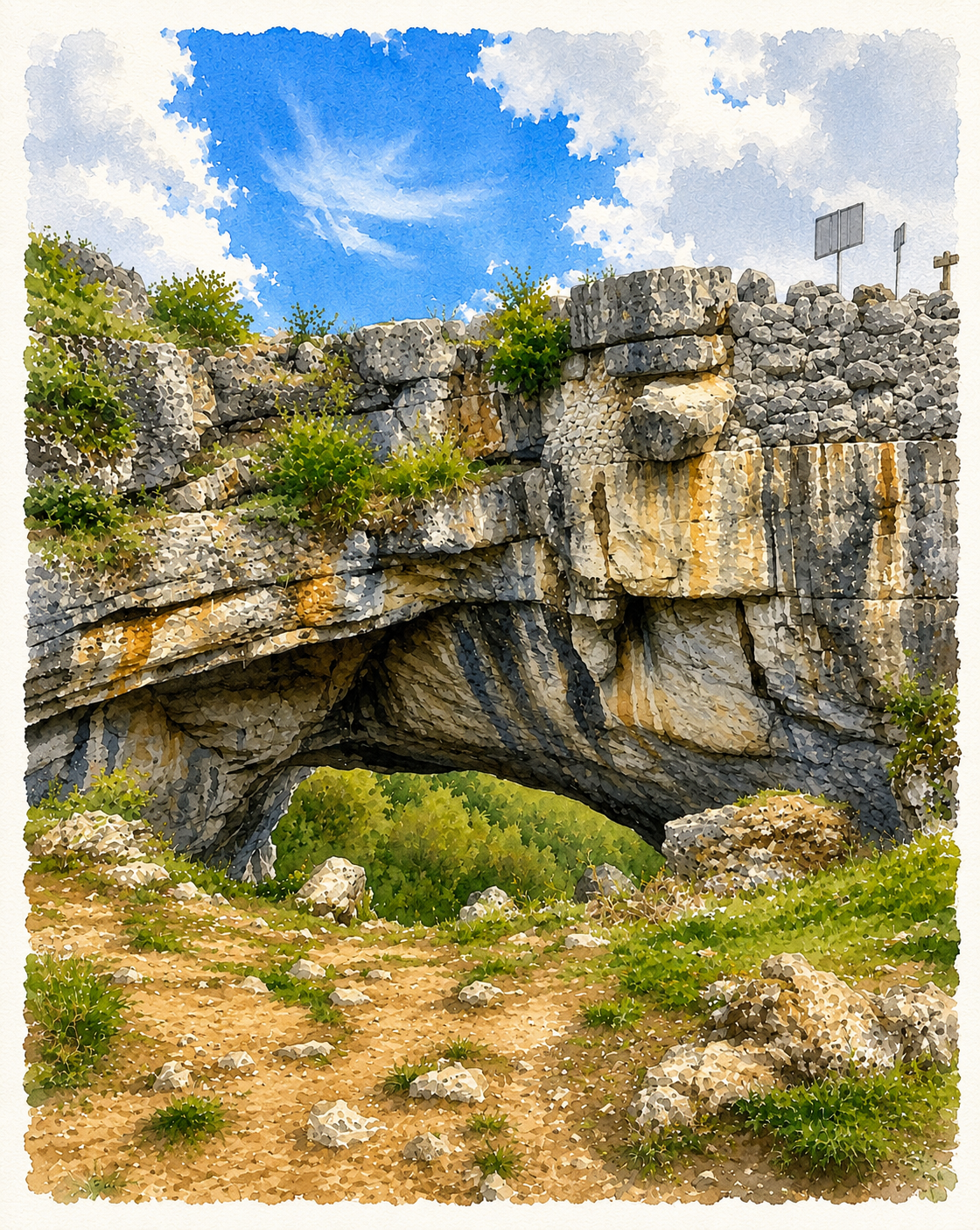
In Ponoarele commune, on a unique karst relief in Oltenia, lies the Bridge of God – the only natural bridge in Romania over which cars travel. Formed by the collapse of the Ponoarele Cave ceiling, the bridge impresses with its dimensions, beauty, and the legends that surround it. Nearby are fields of lapies, karst lakes, and spectacular caves, transforming the area into an ideal destination for hiking, photography, and discovering a rare landscape.
The Bridge of God, located in Ponoarele commune in Mehedinți County, is one of the most spectacular natural monuments in southern Romania. It is the only natural bridge in the country open to road traffic and one of very few such bridges in the world. Formed from massive limestone, with an opening of about 25–30 meters, it represents both an important geological objective and a symbol of the area. The surrounding karst landscape, made up of fields of lapies, dolines, and karst lakes, completes the unique natural setting.
Location and access
-Location: Ponoarele Commune, Mehedinți County
-Distances: 30 km from Baia de Aramă, 60 km from Drobeta-Turnu Severin
-Road access: on DN67D, asphalted and well-marked road
-Landmarks: the bridge is located at the edge of the village, near the old church and Zatonul Mare Lake
-Parking: available a few meters from the objective; free pedestrian access
How the Bridge of God was formed
The bridge is the result of the collapse of the ceiling of Ponoarele Cave, a rare natural geological process.
A part of the limestone arch remained intact, forming the current archway.
-Dimensions: length 30 m, width 13 m, thickness approx. 9 m
-The only natural bridge in Romania over which vehicles travel
-Numerous karst forms are found around it: dolines, lapies, caves, and temporary lakes
Legends and local traditions
-The bridge is surrounded by numerous folk tales
-The most famous says that God struck the cave ceiling to trap the Devil
-Other local traditions state that the bridge was built for God to reach people
-Legends contribute to the spiritual renown of the area
Geology and landscape
The entire Ponoarele area is a karst reserve, where one can visit:
-Ponoarele Cave – galleries over 700 m
-Lapies Field – the most extensive lapies surface in Romania
-Zatonul Mare Lake and Zatonul Mic – temporary karst lakes
Together they form a remarkable geological landscape, ideal for nature enthusiasts.
What you can do in Ponoarele
-Photography: excellent shots in the morning and at sunset
-Hiking: accessible trails to Lapies Field and Balta Mountain
-Speleological exploration: guided tours in Ponoarele Cave (only during authorized periods)
-Events: The Bridge of God Festival, annually in June
-Relaxation: suitable areas for picnics and spending time outdoors
Accommodation and gastronomy
-Accommodation: Ponoarele, Baia de Aramă, and Drobeta-Turnu Severin
-Local guesthouses: traditional dishes – cheeses, trout, sarmale, fig jam
-Agritourism households: some with a view of the bridge
When to visit
-Recommended period: May – October
-Spring and autumn: excellent light and rich vegetation
-After rains: Zaton Lake fills up, spectacular scenery
-Winter: the bridge has a special appearance, especially after snowfall
Useful tips
-Cross the bridge on foot as well, to see the archway from underneath
-Avoid entering Ponoarele Cave after rains – the water level rises rapidly
-Bring water and snacks – the area does not have large stores
-Do not climb on the edge of the bridge – the rock is slippery and friable
Curiosities
-Estimated age: over 2 million years
-Dimensions: opening 25 m, height 13 m
-Declared a geological natural reserve in 2000
-Under the bridge flows the Ponor stream, which reappears in Zaton Lake
-The Ponoarele area is considered a unique “karst garden” in southern Romania
The Bridge of God is one of Romania's most important natural karst objectives, combining geological value with local traditions. Located in a varied and accessible landscape, it is an ideal destination for hiking, photography, and exploration. Each visit offers a different perspective, and the area attracts with its simplicity, authenticity, and the peaceful atmosphere of Ponoarele village.